PEOPLE · LITERATURE · ARTS & CULTURE
The Man Behind the Words: The Literary Journey of Virgilio S. Almario
Known to readers as Rio Alma, Virgilio S. Almario is one of the Philippines’ most influential literary figures—a poet, critic, translator, editor, teacher, and cultural administrator whose work has helped shape modern Filipino literature. His journey is not simply one of writing poems, but of examining language, culture, identity, and the role of literature in society.
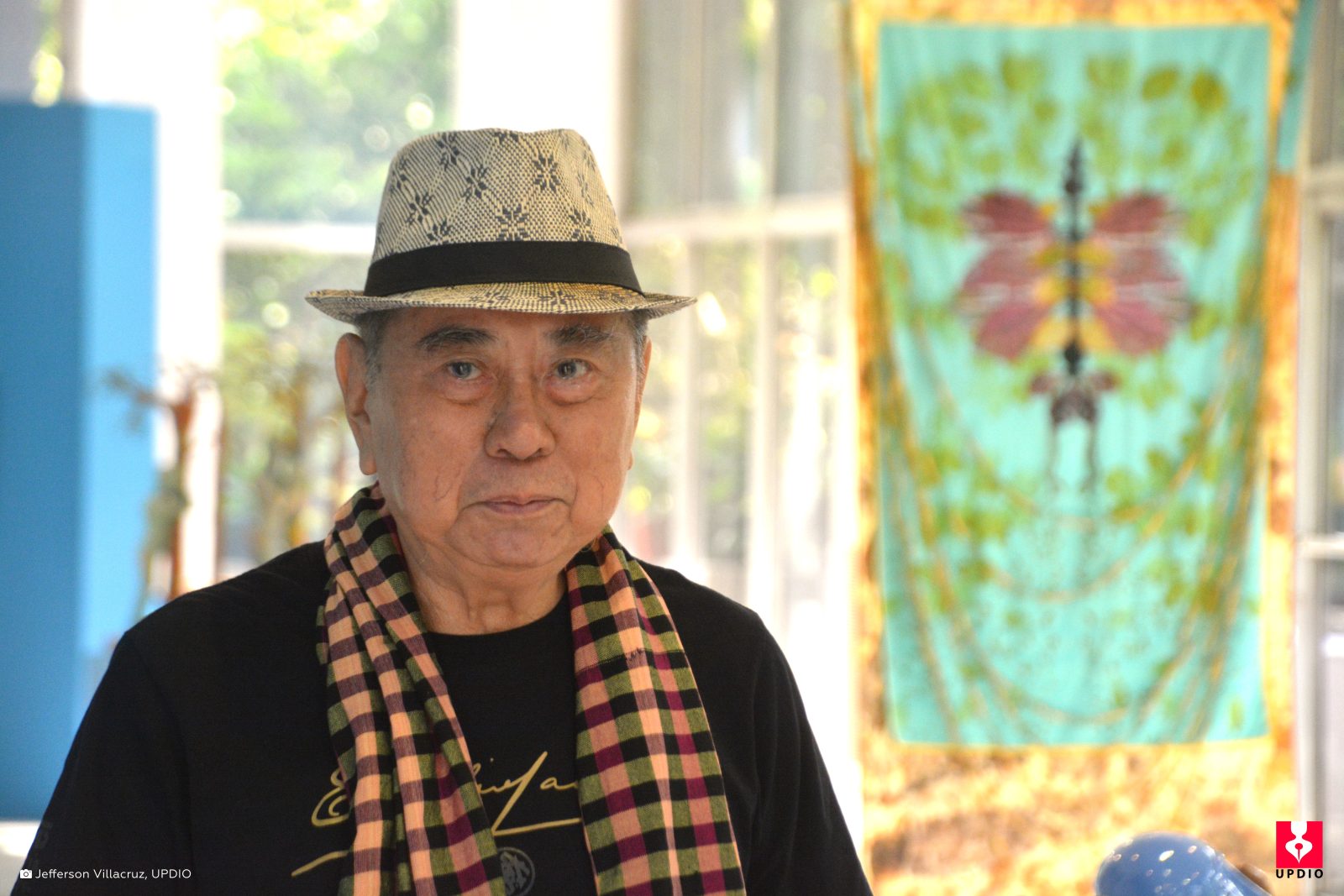
Literature can preserve a moment, challenge an idea, or give language to experiences that are difficult to explain. In the Philippines, poetry has long been part of conversations about identity, history, social change, and the Filipino language.
Virgilio S. Almario’s work sits within that tradition. Over decades, he has written poetry and criticism, translated literary works, taught, organized writers, and taken on cultural leadership roles. His career demonstrates how a literary life can extend beyond the page into education, advocacy, and the institutions that support culture.
Almario was recognized as National Artist for Literature in 2003, a distinction formally declared through Presidential Proclamation No. 386. The proclamation recognized his literary achievements and their contribution to Filipino cultural heritage.
From San Miguel, Bulacan to a life in literature
Virgilio S. Almario was born on March 9, 1944, in San Miguel, Bulacan. He studied Political Science at the University of the Philippines Diliman, completing his undergraduate degree in 1963. His academic path and early experiences eventually developed into a career devoted to writing, literary study, teaching, and cultural work.
His literary identity is closely associated with the pen name Rio Alma. Under that name, he published poetry while also developing a substantial body of work in criticism and literary history. His career reflects both the practice of creative writing and the study of how literature is made, read, and understood.
His early collection Makinasyon at Ilang Tula appeared in 1967, marking an important step in his publishing career. Almario would go on to produce poetry, essays, criticism, translations, and other literary works across several decades.
Sources: LIRA — Virgilio S. Almario profile and SunStar — Who is Virgilio Almario?.
A poet navigating tradition and modernism
Almario is associated with the modernist movement in Filipino poetry. His work and criticism have engaged with the relationship between traditional poetic forms and modern approaches to writing, helping open space for new ways of thinking about Filipino poetry.
He has written poetry that moves across different modes and subjects, while his critical work examines literary movements, poetic technique, and the history of Filipino writing. This dual role—as poet and critic—has made his contribution broader than the publication of individual collections.
Literary criticism can shape how readers understand a work and how writers approach their craft. Almario’s essays and books on poetry have contributed to discussions about the Filipino literary tradition, modernism, and the possibilities of writing in Filipino.
Among his works in criticism are Ang Makata sa Panahon ng Makina and Balagtasismo versus Modernismo, titles that reflect his continuing engagement with poetry, literary history, and the debate between tradition and modern literary expression.
Writing in Filipino—and widening what the language can express
A significant part of Almario’s work has centered on Filipino language and literature. He has advocated for the development and use of Filipino and contributed to literary scholarship that explores the language’s expressive capacity.
His career includes creative writing, literary translation, editing, teaching, and cultural administration. These roles are connected by a common concern: how language carries thought, imagination, history, and cultural experience.
Translation is another part of his literary work. He translated major works of Philippine literature, including José Rizal’s Noli Me Tangere and El Filibusterismo, helping make these texts available to readers in Filipino. His work with language is not limited to creating new poems; it also involves interpreting and bringing established literature into new linguistic contexts.
Source: SunStar — Who is Virgilio Almario?.
Beyond the individual writer: building spaces for other poets
Almario’s literary work has also included organizing and mentoring writers. He founded Linangan sa Imahen, Retorika, at Anyo (LIRA), a Filipino poetry organization that brings together poets and supports the study and practice of poetry.
Writing communities, workshops, and literary organizations can be important to the development of a creative field. They give writers opportunities to share work, receive feedback, learn technique, and engage with other voices. Almario’s involvement in literary organizations reflects an investment in poetry as a community practice—not simply an individual pursuit.
His cultural and academic roles have included positions at the University of the Philippines Diliman, including leadership in its College of Arts and Letters, and government cultural institutions. He also served as chair of the Komisyon sa Wikang Filipino and as chair of the National Commission for Culture and the Arts during earlier periods of his career.
Sources: LIRA — Virgilio S. Almario and UP Diliman — Ang laban ng Filipino bilang wikang pambansa.
National Artist for Literature
In 2003, Almario was declared National Artist for Literature through Presidential Proclamation No. 386. The official proclamation recognized his achievements in literature as contributing to the country’s cultural heritage and national identity.
The National Artist distinction is among the Philippines’ highest recognitions for contributions to the arts. In Almario’s case, the award reflects a career that includes poetry, literary criticism, translation, teaching, and cultural leadership.
Source: LawPhil — Presidential Proclamation No. 386.
A body of work across poetry, criticism, and translation
Almario’s literary output spans more than one form. He has published poetry collections, works of literary criticism, essays, and translations. His writing and editorial work reflect sustained engagement with Philippine literary history and the possibilities of contemporary poetry.
His titles include Makinasyon at Ilang Tula, Peregrinasyon at Iba Pang Tula, Doktrinang Anakpawis, Mga Retrato at Rekwerdo, and Balagtasismo versus Modernismo. These works are part of a wider body of writing that readers and scholars explore in discussions of Filipino poetry and literary criticism.
Rather than reducing his contribution to a list of books, it is useful to see the range of his work as a conversation across forms: poetry creates, criticism examines, translation carries literature across languages, and teaching passes knowledge and practice to others.
Source: PanitikanPH — Virgilio S. Almario.
Why his story matters beyond literature
Almario’s journey offers a reminder that meaningful work does not always follow a commercial path. A life in poetry, criticism, translation, and cultural education can influence how people see themselves, how they understand their history, and how they value their language.
Literary influence can be difficult to measure in conventional terms. It may appear in a student discovering a poem, a writer finding a new form, a reader encountering a familiar story in their own language, or a community continuing to value the arts.
His career also shows that creative work can have several dimensions. Writers may be artists, educators, editors, translators, organizers, and mentors. Their contribution can reach beyond their own published work into the communities and institutions that help literature thrive.
The continuing place of poetry
Poetry remains one of the ways people make sense of change, memory, belonging, and the everyday. It can be personal, political, playful, experimental, or deeply rooted in tradition. It can also invite readers to slow down and pay attention to language in ways that ordinary conversation may not.
Almario’s long literary journey—from early poetry collections to criticism, translation, teaching, and cultural leadership—illustrates the many ways a person can devote a life to words.
His story is not only about recognition or titles. It is about the sustained work of writing, thinking, translating, teaching, and creating spaces where other people can continue to write.
Sources and further reading
This profile is based on institutional profiles, published literary references, official recognition records, and reporting. Links are provided for readers who want to explore Almario’s work and career further.
- Linangan sa Imahen, Retorika, at Anyo (LIRA) — Virgilio S. Almario. Profile on his literary roles, career, awards, and institutional contributions.
- LawPhil — Presidential Proclamation No. 386 (May 26, 2003). Declaration of Virgilio S. Almario as National Artist for 2003.
- University of the Philippines Diliman — Ang laban ng Filipino bilang wikang pambansa. University article featuring Almario and his work on Filipino language and literature.
- SunStar — Who is Virgilio Almario? Published profile on his life, education, literary work, and translations.
- PanitikanPH — Virgilio S. Almario. Literary overview of his books, poetry, criticism, and career.
- Cultural Center of the Philippines — National Artist Rio Alma’s Poetry in a Musical. Cultural program highlighting his poetry through musical and performance interpretation.
This article is an independent editorial profile based on publicly available sources. It is intended for informational and cultural discussion and is not an exhaustive biography or academic assessment of Virgilio S. Almario’s literary work.